01
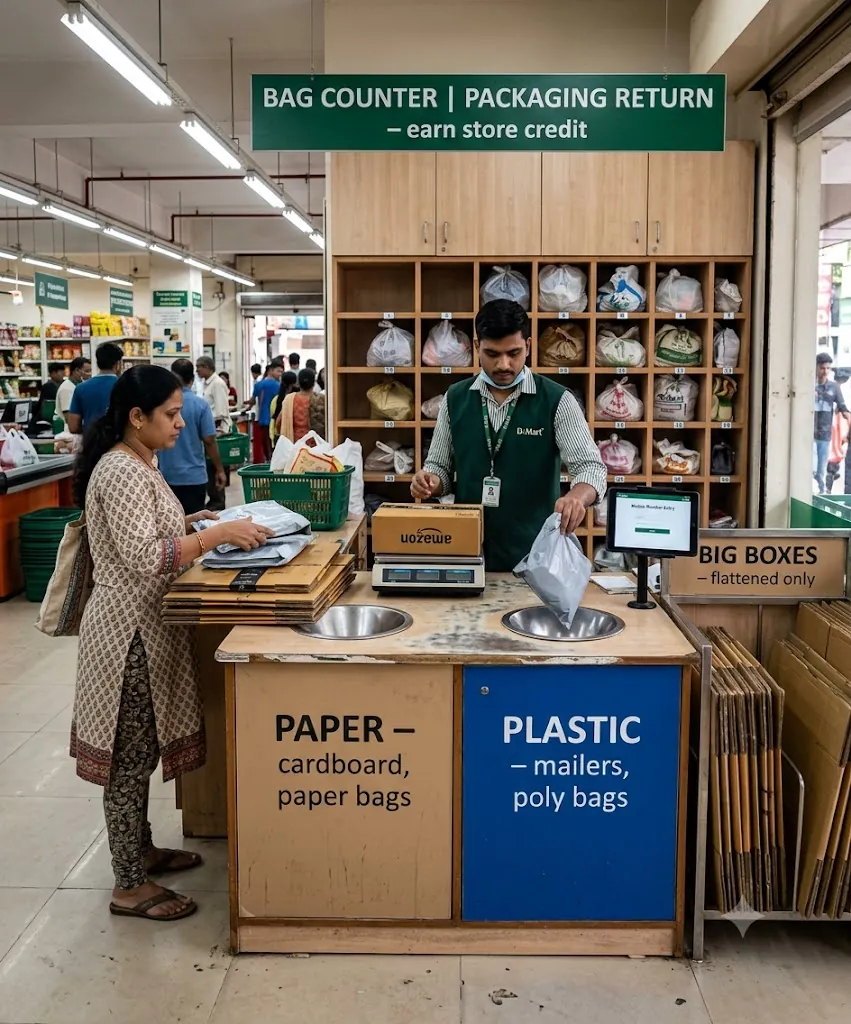
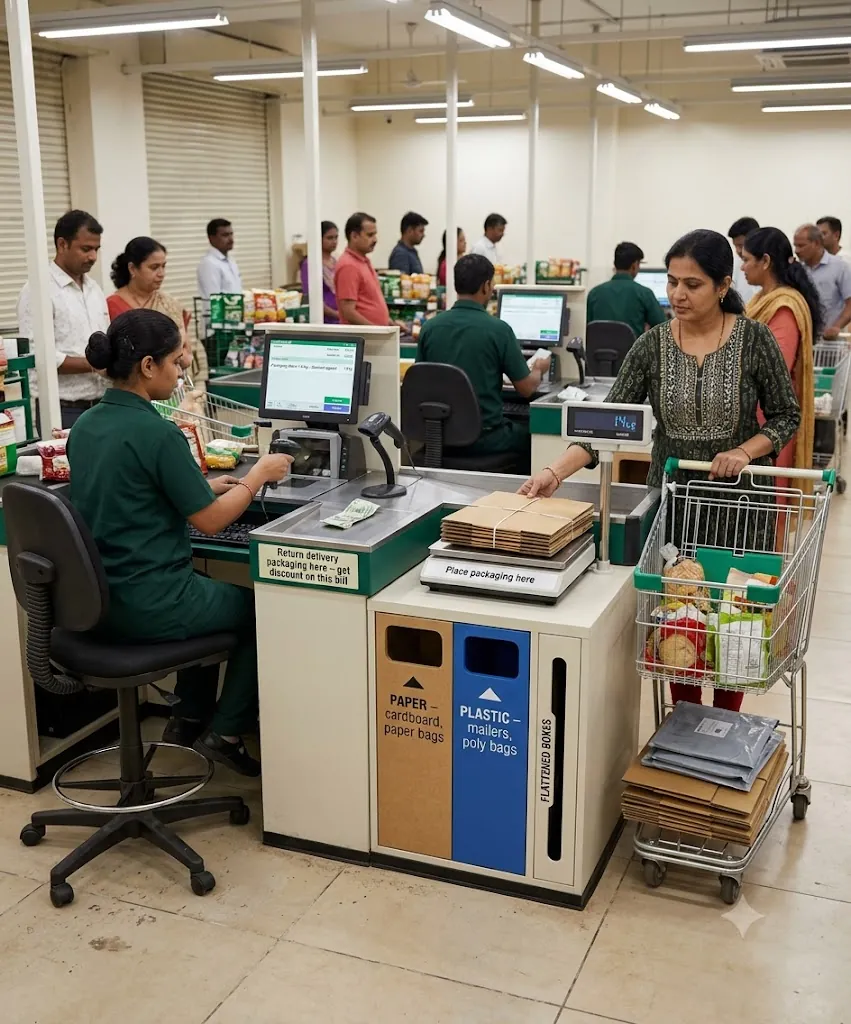
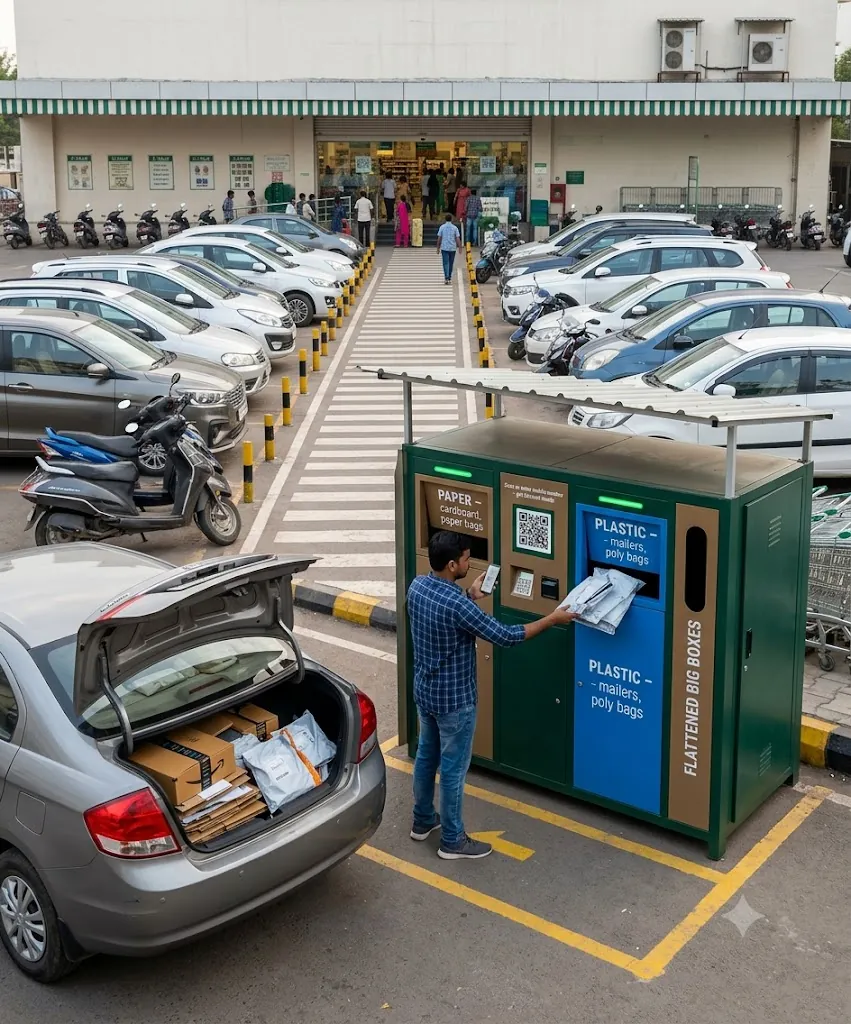
Supermarkets & hypermarkets
Routine → integrate collection
People already make essential shopping trips, and stores already sell the packaging they receive from wholesalers.
Sustainability · Service design · August 2026
Online deliveries leave every Pune household with a steady pile of boxes, mailers and bags. People already set them aside. Almost none of it makes it to a recycler. I designed concepts for a public collection system that closes that gap.
How the work was split: the team (Vishruta Kelkar, Snehal Dusane, Diya Varshney and I) researched the problem together, then each of us took one part of the collection chain. My deep dive: the public collection centre. Everything from section 03 onwards is my individual work.
01 · The problem
Pune’s system already collects and segregates waste through PMC and SWaCH. The gap is earlier: between a household that has sorted its packaging and a recycler who could use it.
02 · Research
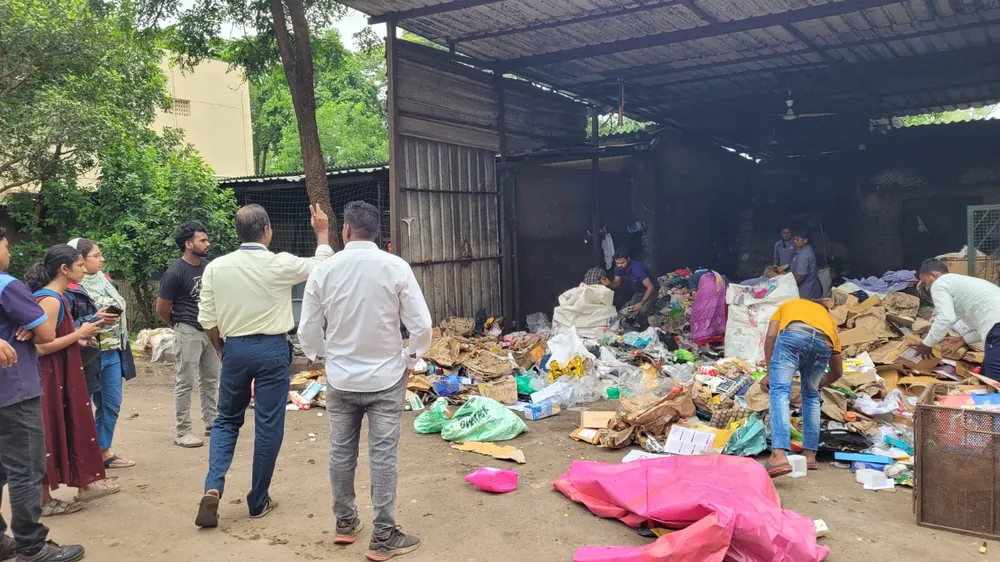
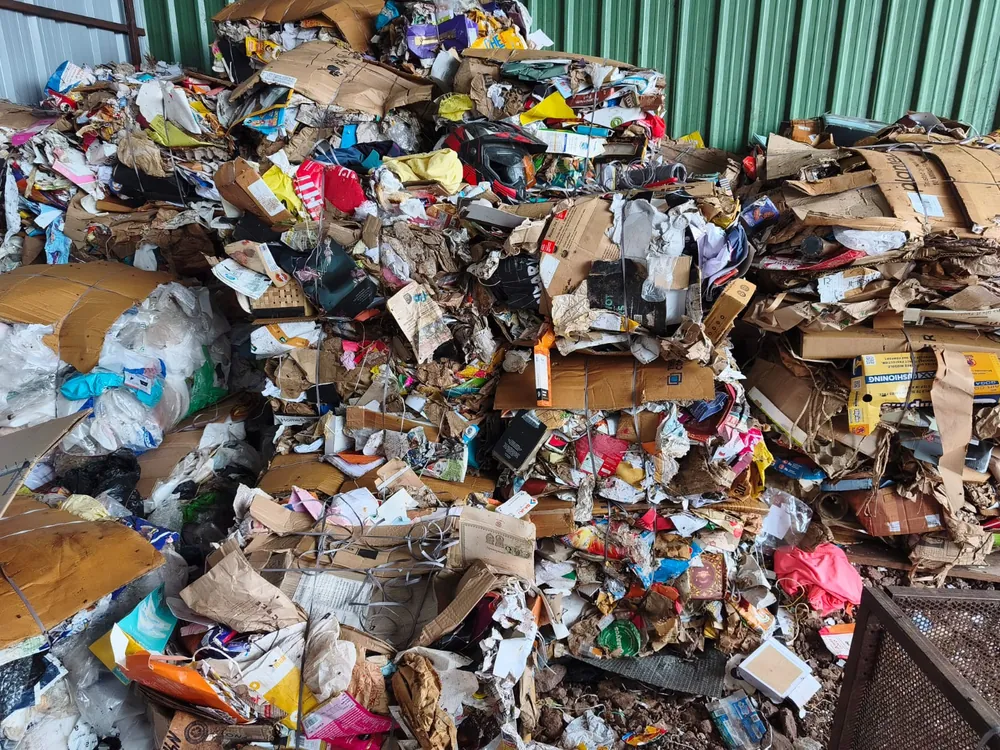
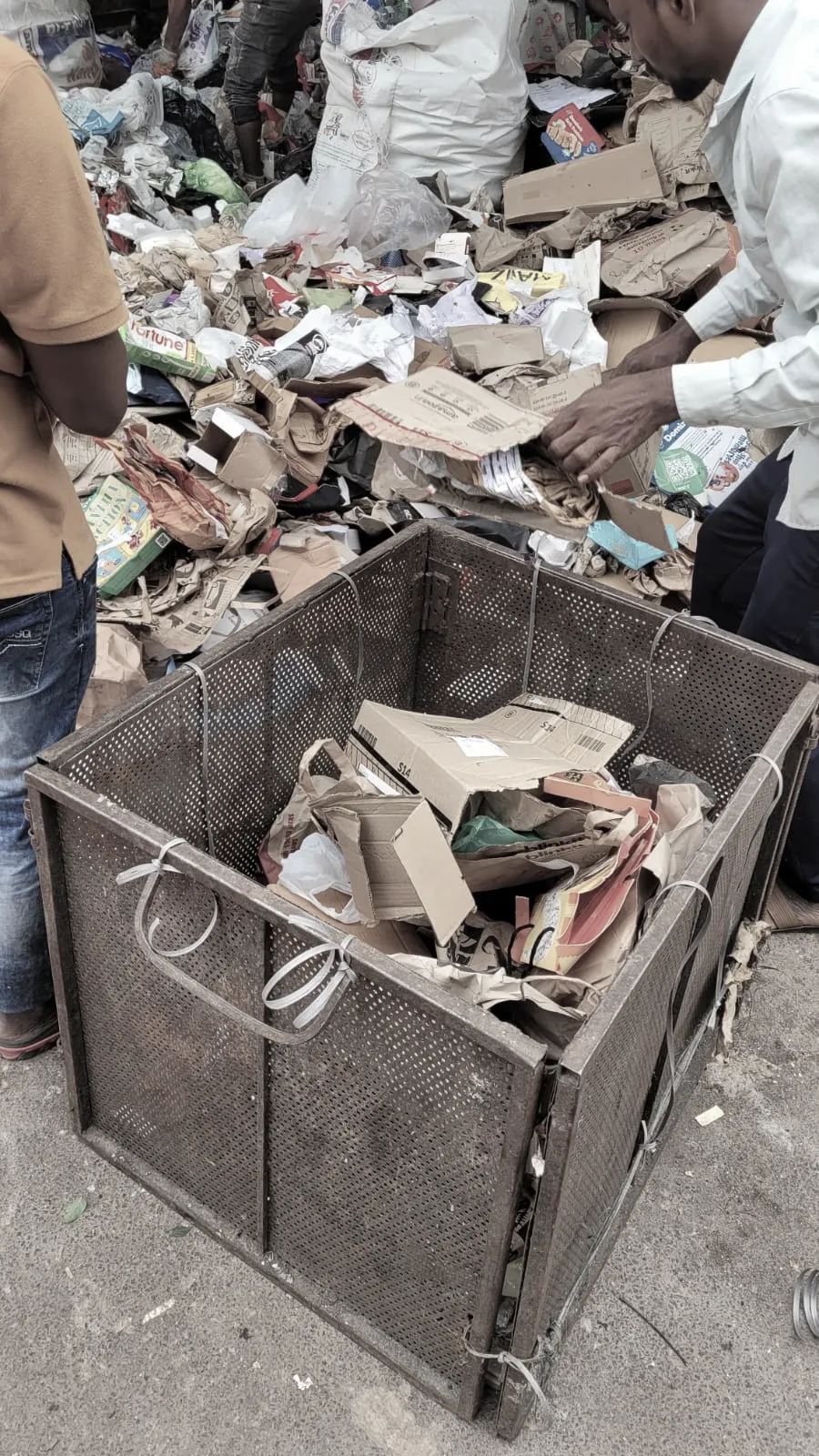
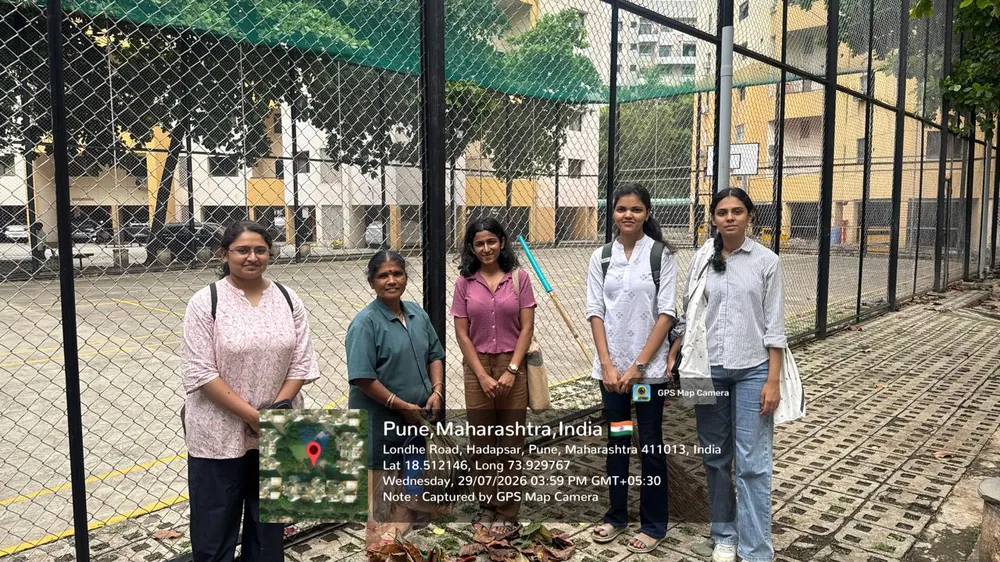
Insight: the behaviour isn’t the barrier. People already keep packaging aside. They just need a clear reason, and a clear place, to hand it over.
03 · My deep dive
I zoomed in on one question: what stops people from handing over packaging they’ve already sorted? 13 one-to-one interviews: 8 residents, 3 delivery partners and 2 watchmen across Kothrud, Magarpatta, Amanora and Sinhagad Road.
“In our busy schedules it’s not possible to take out time and energy to go to a recycler.”
“We do store and give newspaper for recycling, but never thought of packaging waste.”
“In Ahmedabad we used to segregate, clean and give it to a recycling center…”
04 · Synthesis
How might we design a convenient public collection system that lets people deposit their already-segregated dry packaging waste, while making participation worthwhile?
05 · Ideation
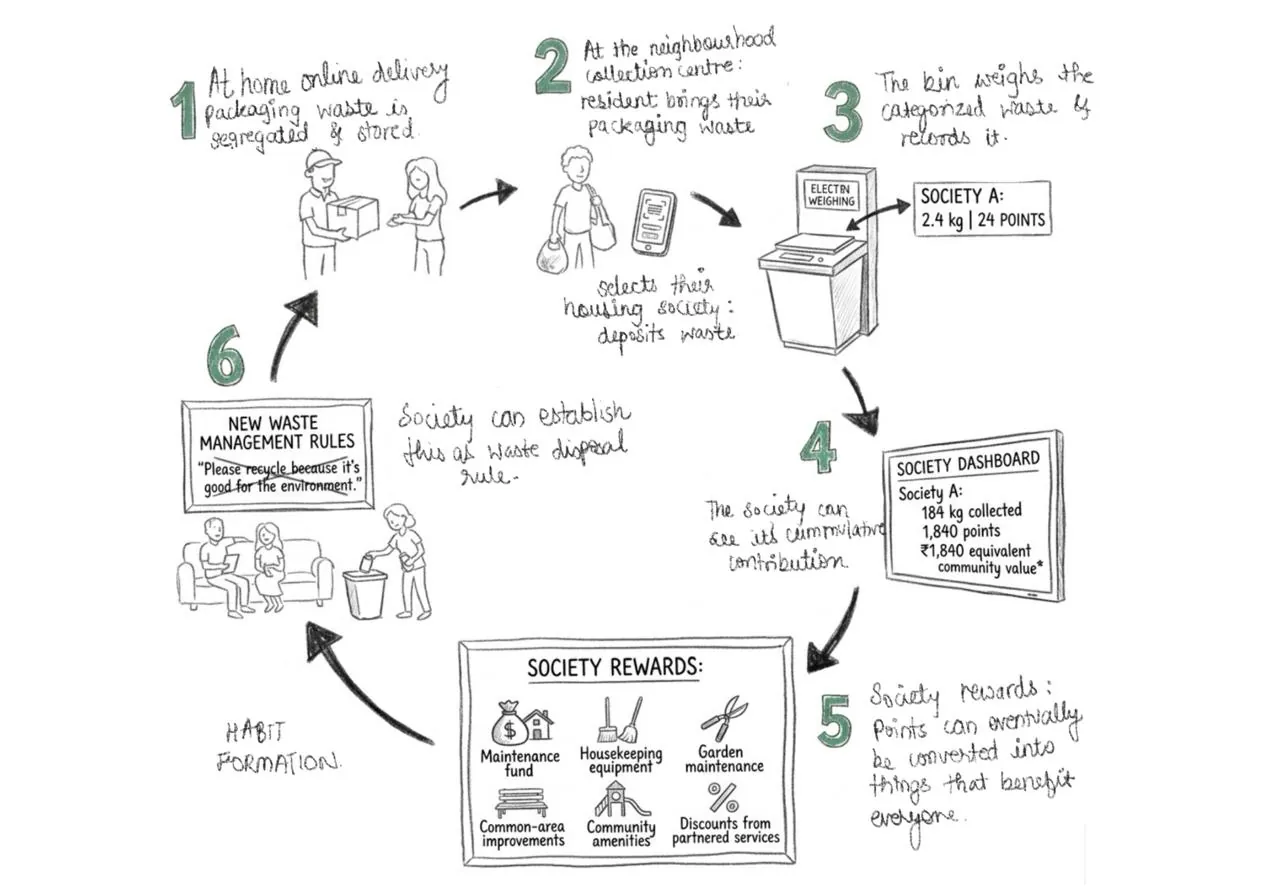
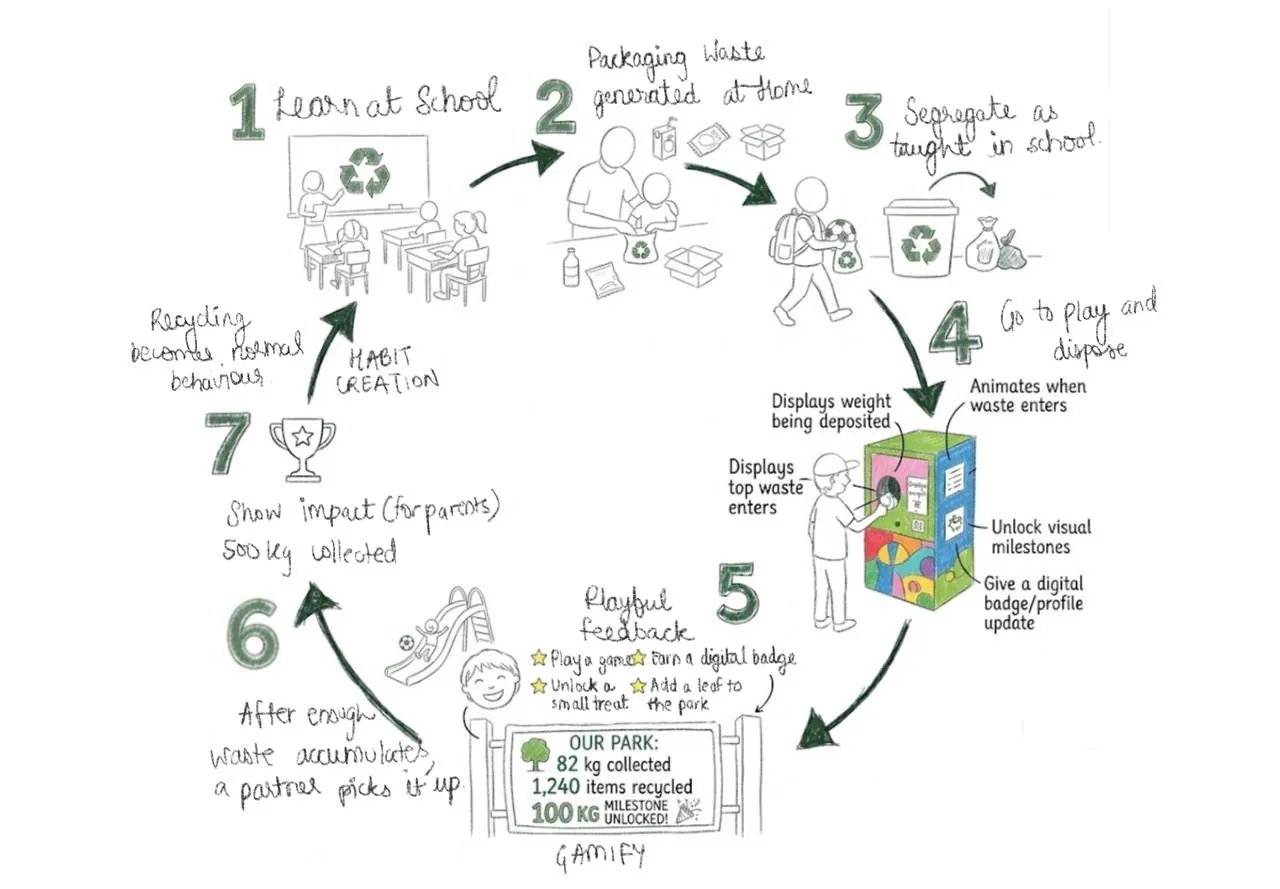
I drew each idea as a loop from the household to the recycler, so I could see who carries the effort and who gets the value.
06 · Concepts
I framed every variation as a hypothesis, e.g. “Can recycling become the last step of a shopping trip?”, and weighed it by its opportunities and trade-offs for the user, the operator and the recycler.
Routine → integrate collection
People already make essential shopping trips, and stores already sell the packaging they receive from wholesalers.
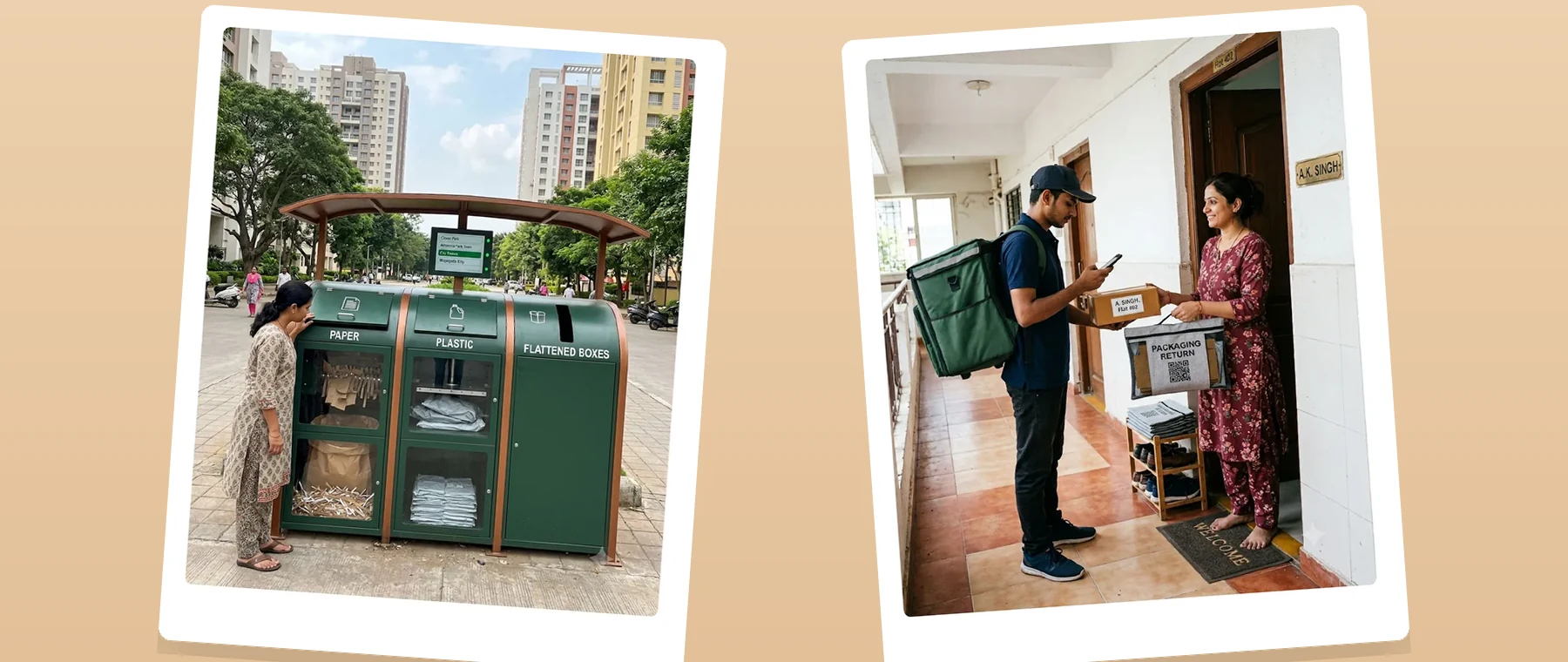
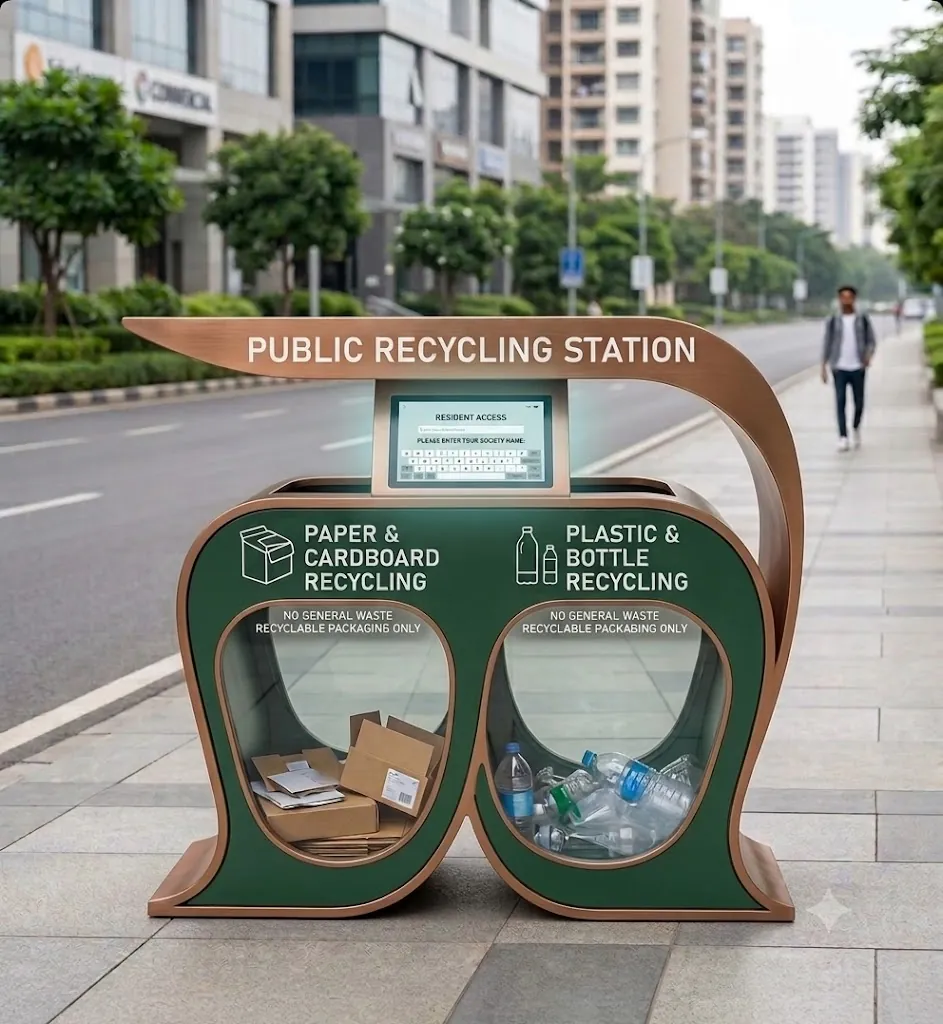
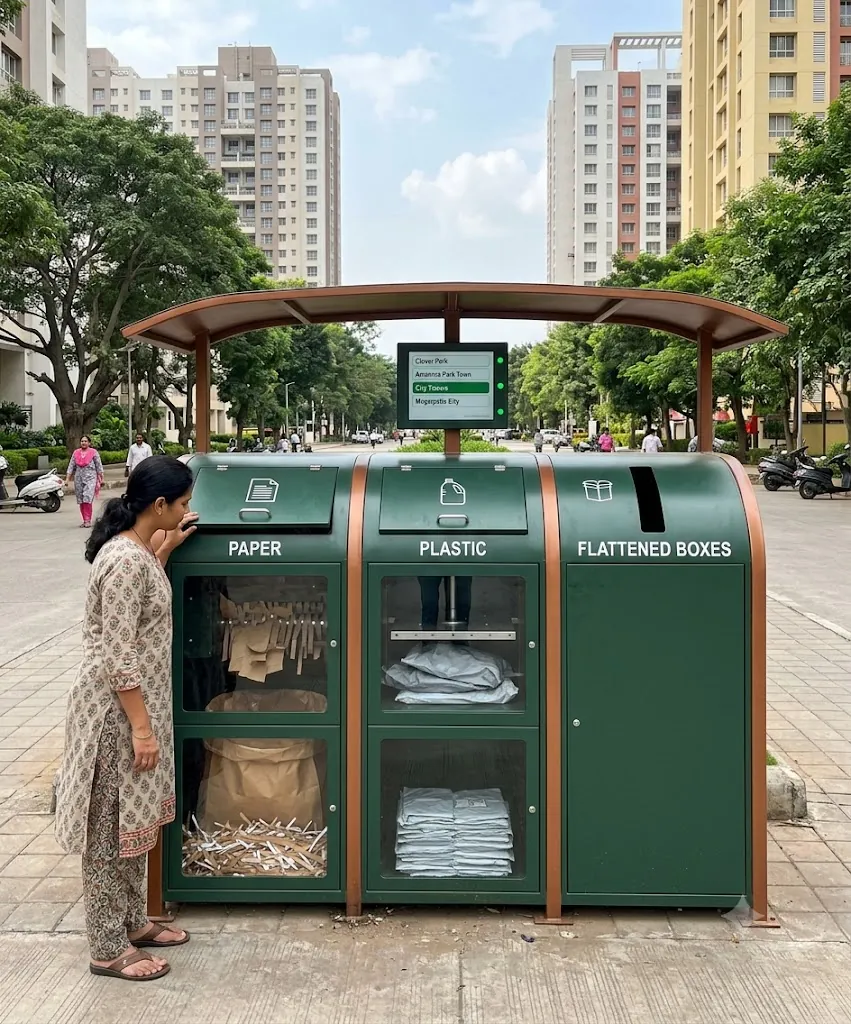
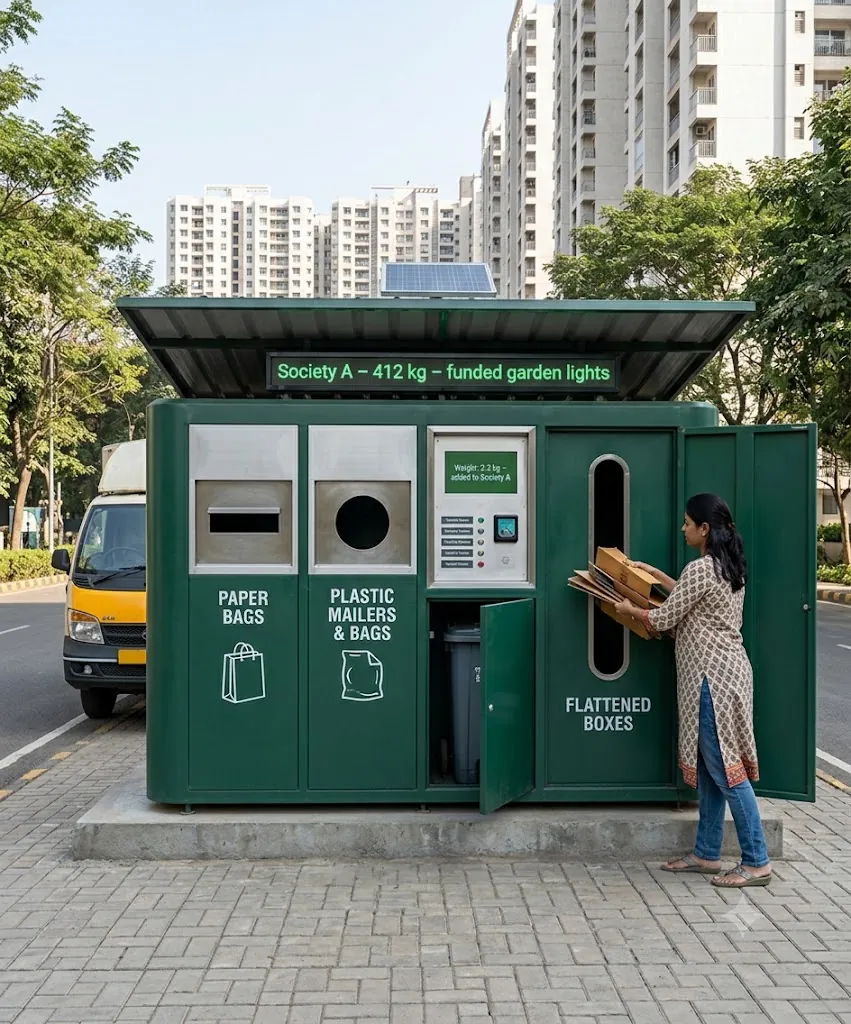
Individual action → collective benefit
One household struggles to justify the trip. Townships like Magarpatta and Amanora share common roads that work as a transit point.
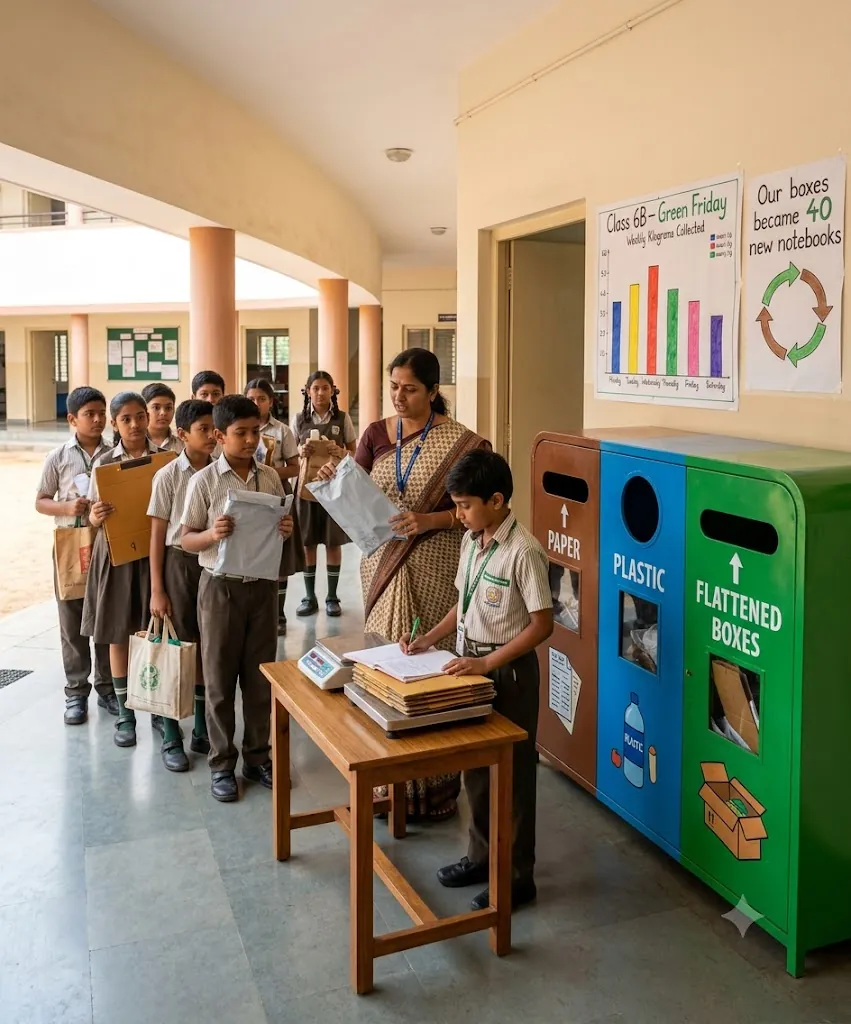
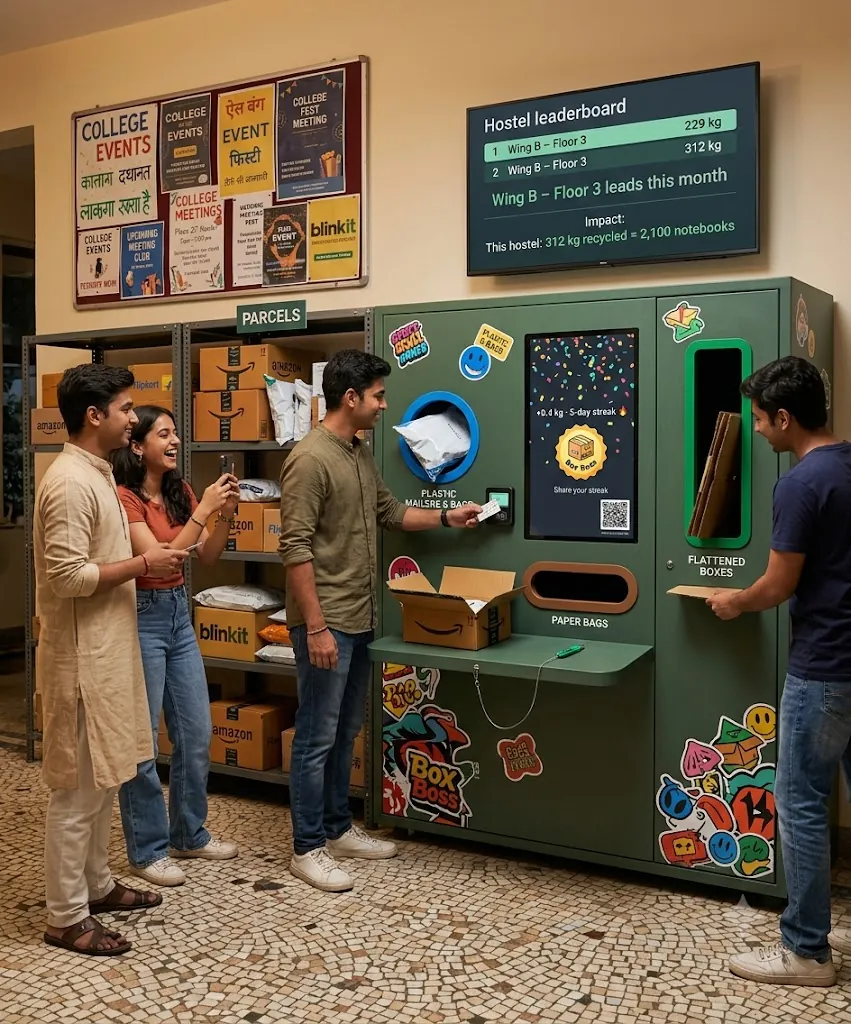
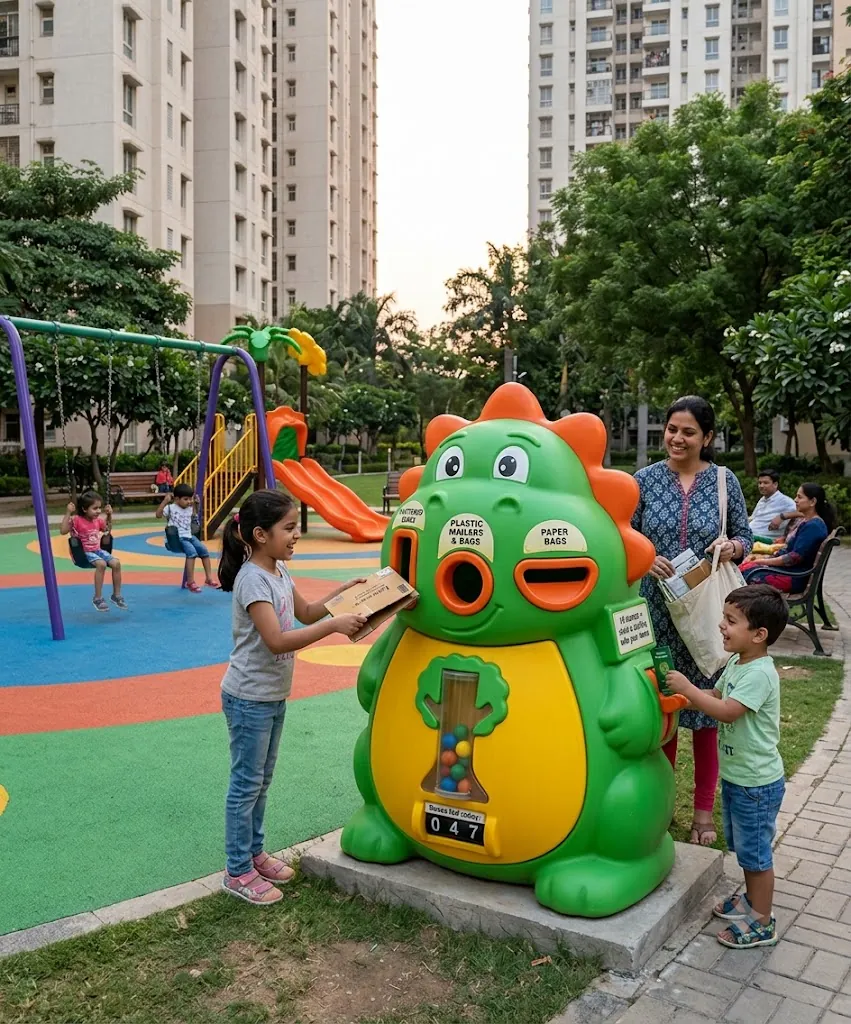
Learn → practise → repeat
Young people are frequent delivery users, and habits formed early stick.
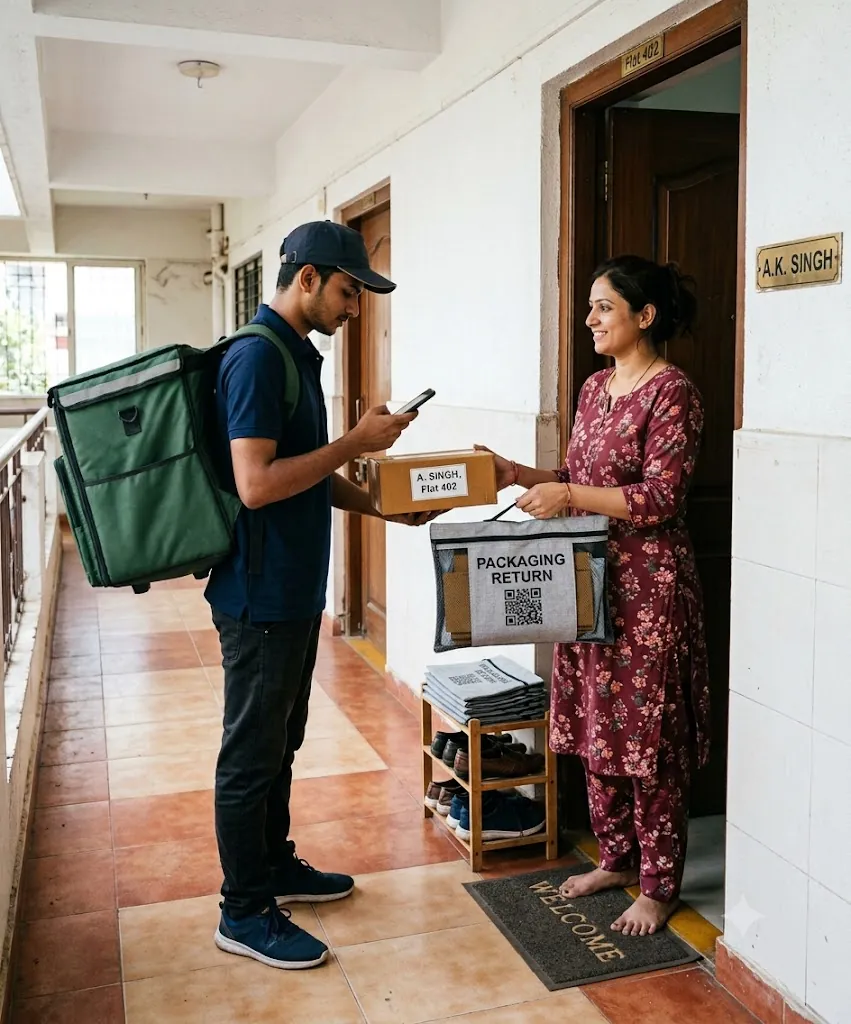
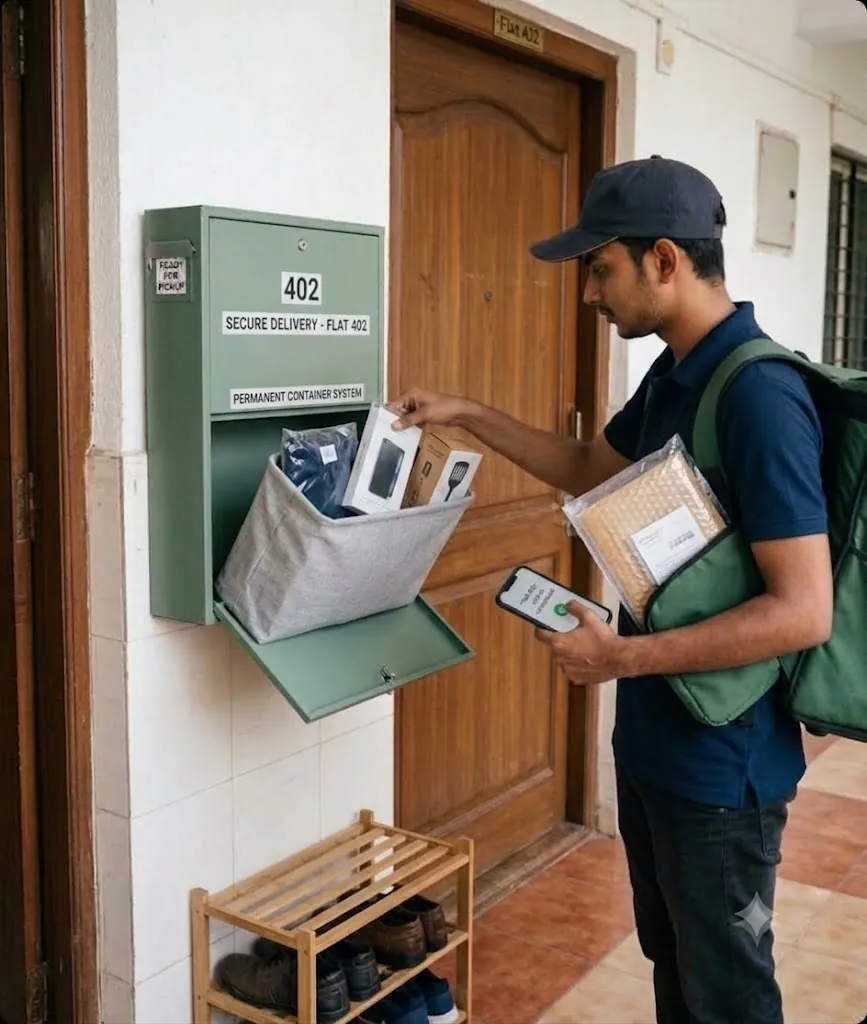
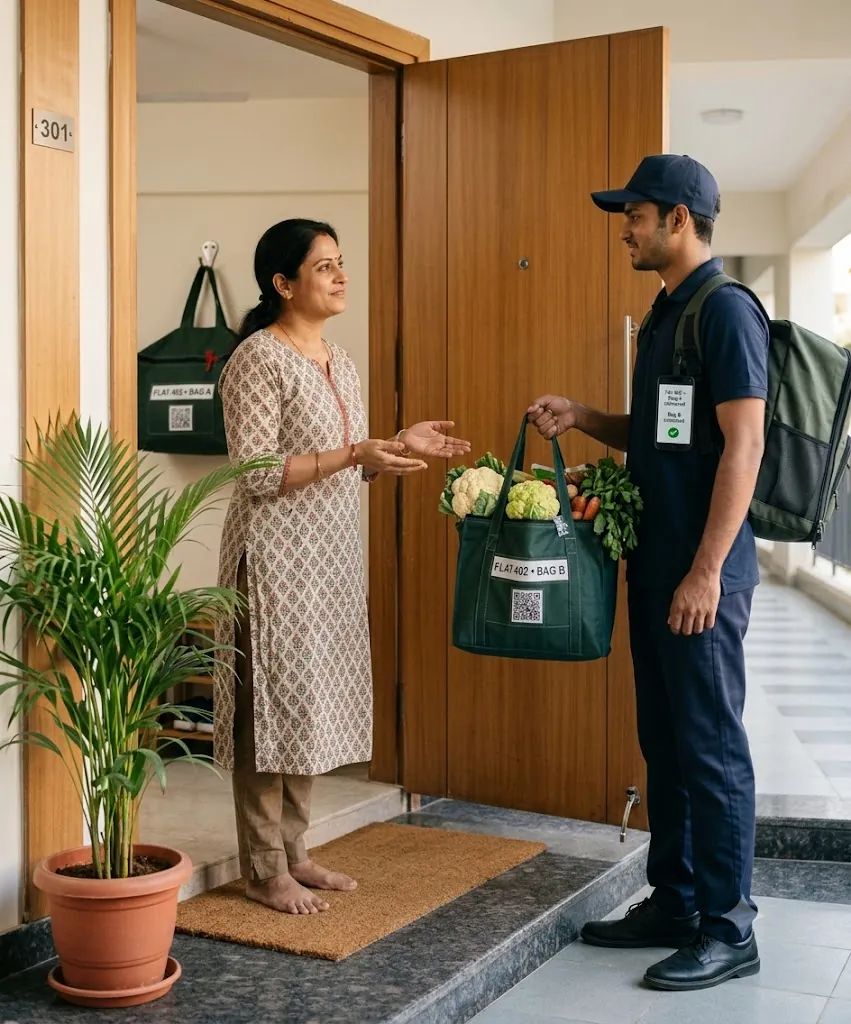
Delivery → return → reuse / recycle
The biggest barrier is the extra trip, and e-commerce platforms already have the logistics.
07 · Where it landed
The brief called for concepts rather than a single final design, so I didn’t pick a winner. Each concept answers the same question differently: where should a public collection point sit so that handing packaging over takes no extra trip? Where people shop, where they live, where they learn, or at their own door. Because every variation is written as a hypothesis, the next step is a field test, not more polish.
A shared station on a common road in one township such as Magarpatta, where several societies already pass the same point, run for a few weeks.
Kilograms of packaging collected per society per week, the share of households that drop off at least once, and how many come back a second time.
If people drop off once and stop, the payoff isn’t working, and the society-rewards variation should be tested next.
08 · Reflection
Want the detail?